Posts

Showing posts with the label 15th century

Helmet "Tolga" with Kayı Tamgha, 15th century
Image
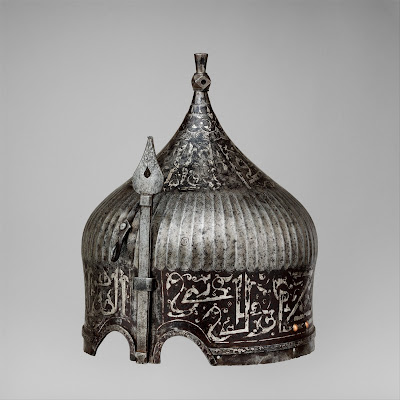
Steel Turkish Helmet “Tolga”  Turkish Helmet “Tolga” made of steel, iron, silver and copper alloy, stamped with the Kayı boyu Tamgha  and decorated in silver with inscriptions which include the phrases "Glory to our Lord, the greatest Sultan, the noble, the mighty Khagan, master of the necks (of nations)" . Late 15th century, Height: 30, 5 cm. Weight: 1401 g. A tamgha (stamp, seal) is an abstract seal used by Turks as the emblem of a particular tribe. The KAYI tribe (Turkish: Kayı boyu) is a sub-branch of the BOZOK Tribal federation of OGHUZ Turks. Osman I, founder of Ottoman Dynasty was a hereditary leader in the Kayı tribe. Royal arsenal of the Ottoman Dynasty used Kayı Tamgha as it’s distinctive mark on every kind of weaponry. Çelik Türk Miğferi "Tolga" Çelik, demir, gümüş ve bakır alaşımından yapılmış, Kayı boyu damgalı ve “Görkem, Beyimiz, En büyük Sultan, Asil, Güçlü Hakan, boyunların (Ulusların) efendisine” ifadelerini içeren gümü...
MEHMED II The Conqueror, Sultan of the TURKS

Image
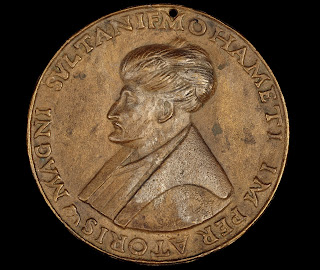
Medal of  Sultan Mehmed Khan II MEHMED II Sultan of the TURKS. The Bronze Medal of  Sultan Mehmed Khan II  (1432 – 1481),  made by Gentile Bellini, Venice 1480, diameter: 9.2 cm.  Inscriptions on the obverse:  “MAGNI SVLTANIFMOHAMETI IMPERATORIS”  (The Great Sultan Mehmed Emperor) Inscriptions on the reverse:   “GENTILIS BELLINVS VENETVS EQVES AVRATUS COMES . Q[ue] . PALATINVS . F[ecit] . ”  (Gentile Bellini, Venetian, gilded knight and count palatine, made it)   Obverse Reverse Fatih Sultan Mehmet Han Madalyonu Fatih Sultan Mehmet, TÜRKLERİN Sultanı. Gentile Bellini tarafından yapılan bronz Fatih Sultan Mehmet Han (1432 – 1481) madalyonu, Venedik 1480, çap: 9.2 cm.  Ön yüzdeki y azıtlar:  “MAGNI SVLTANIFMOHAMETI IMPERATORIS”  (Büyük Sultan Mehmed, İmparator) Arka yüzdeki yazıtlar: “GENTILIS BELLINVS VENETVS EQVES AVRATUS COMES . Q[ue] . PALATINVS . F[ec...

Turban Helmet with Aventail "Peçelikli Miğfer", 15th century

Image
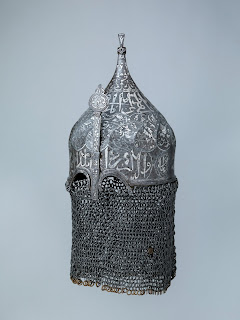
Turkish Turban Helmet Turkish Turban Helmet with Aventail (Peçelikli Miğfer), stamped with the Kayı Boyu Tamgha, late 15th century. This turban helmet retains the mail aventail that protected the lower half of the face and neck. The aventail is fixed with a lead seal stamped with the Kayı tribe Tamgha used in the Ottoman Dynasty arsenals. A tamgha (stamp, seal) is an abstract seal used by Turks as the emblem of a particular tribe. The KAYI tribe (Turkish: Kayı boyu) is a sub-branch of the BOZOK Tribal federation of OGHUZ Turks. Osman I, founder of Ottoman Dynasty was a hereditary leader in the Kayı tribe. Royal arsenal of the Ottoman Dynasty used Kayı Tamgha as it’s distinctive mark on every kind of weaponry. Türk Peçelikli Miğfer  Kayı Boyu damgası ile mühürlenmiş, Türk Peçelikli Miğfer (Tolga/Tulga), geç 15. yüzyıl. Bu miğferin yüzün alt kısmını ve boynu koruyan zincir zırh peçeliği halen mevcuttur. Peçeliğe Osmanlı hanedanı silahhanelerinin kullandığı K...

Rumelian Castle "Rumelihisarı", The Strait-Cutter

Image
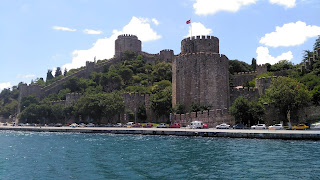
Rumelian Castle "The Strait-Cutter" Rumelihisarı (Rumelian Castle) or Boğazkesen (literally meaning "the Strait-Cutter") is a fortress built by Sultan Mehmed Khan II, located at the European side and the narrowest point of the Bosphorus strait, just opposite of Anadoluhisarı (Anatolian Castle) on the Anatolian side. The construction began on 15 April 1452, the fortress was completed in a record time of 4 months and 16 days on 31 August 1452. The purposes of the structure were to manage the passing ships in the bosphorus, to create a military-financial control point, and to provide a strong fulcrum-resistance base.  The width of the castle walls was thrice the size of Constantinople, which was 2,5 m. The canon ball technology at  that period was insufficient to destroy this walls with a thickness of 7 m.  Rumeli Hisarı "Boğazkesen" Rumelihisarı ya da Boğazkesen İstanbul Boğazının Avrupa yakasında ve en dar noktasında tam Anad...

Turkish Conical Helmet "Tolga", 15th century

Image
Turkish Conical Helmet Turkish Conical Helmet (Siperlikli miğfer). Made of Steel, iron, gold and copper alloy. Early 15th century; Height: 39,4 cm. Weight: 1797,4 g. This is one of the few conical helmets of the period to retain its original brim, nasal, cheeks, and nape defense. Türk Siperlikli Miğfer Türk Siperlikli miğfer (Tolga/Tulga). Çelik, demir, altın ve bakır alaşımından yapılmış. Erken 15. yüzyıl; Yükseklik: 39,4 cm. Ağırlık: 1797,4 g. Bu miğfer, döneminin özgün güneş, burun, kulak ve ense siperliklerini muhafaza etmiş az sayıda örnekten biridir.

Turkish Saber "Kilij" 15th Century

Image
Turkish Kilij Turkish Kilij (Kılıç, literally "sword") from early 15th century.The blade is chiseled in relief  with verses from the Holy Quran, with the surrounding areas inlaid with gold.  The guard is chiseled with gold-damascened flowers and was formerly inlaid with rubies. The grip, covered with fishskin dyed gren. A “Kilij” is a type of one-handed, single edged and moderately curved saber used by the Turks throughout history starting from the Hsiung-nu period. The Turkish root verb "kır-" means "to break" with the suffix "-inç" makes "kır-ınç" (instrument for breaking) becomes kılınç, then kılıç. Türk Kılıcı Erken 15. yüzyıla ait Türk Kılıcı. Çeliğe oyma kabartma halinde Kuran-ı Kerimden ayetler işlenmiş ve çevresi altın kakma ile süslenmiştir. Balçakta evvelce yakut kakmaları olan hareli, altın çiçek oymaları işlidir. Kabza yeşile boyanmış balık derisi ile kaplıdır. Kılıç,   Asya Hunları döne...