Posts

Showing posts with the label Osmanlı

Turkish Miquelet Rifle "Çakmaklı Tüfek", 18th century

Image
Turkish Miquelet Rifle Turkish Miquelet Rifle, Late 18th century. Made of steel, wood, ivory, copper alloys, mother-of-pearl, gold and silver. Length: 154.31 cm, Calibre: 12 mm, Weight: 4862 g. The name "Muhammad Ayyubi" was inscribed on the lock and the barrel is marked with a Turkish test mark. The miquelet is an early and sturdy form of flintlock popular throughout the Turkish Empire from the 17th into the 19th century.  Türk Çakmaklı Tüfek Türk, Miquelet mekanizmalı, çakmaklı tüfek, Geç 18. Yüzyıl. Çelik, ahşap, fildişi, bakır alaşımları, sedef, altın ve gümüşten imal edilmiştir. Uzunluk: 154.31 cm, Kalibre: 12 mm, Ağırlık: 4862 gr. Ateşleme mekanizması üzerine "Muhammed Eyyubi" ismi yazılmış ve namlu bir Türk test işaretiyle damgalanmıştır.  Miquelet, 17. yüzyıldan 19. yüzyıla kadar Türk İmparatorluğu genelinde popüler olan çakmaklı tüfeklerin erken ve sağlam bir şeklidir.
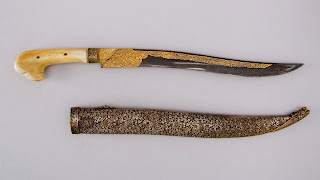
Turkish Knife with sheath, 18th century

Image
Turkish Knife and Seath Turkish Knife with sheath in the form of  a yataghan; made of watered steel, gold, ivory, silver and wood. Length 47, 6 cm. Weight 238, 1 g.18th century. Türk Bıçak ve Kın Yatağan formunda, Türk Bıçağı ile kını; çifte su verilmiş çelik, altın, fildişi, gümüş ve ahşaptan yapılmış. Uzunluk 47, 6 cm. Ağırlık 238, 1 g.18. Yüzyıl.

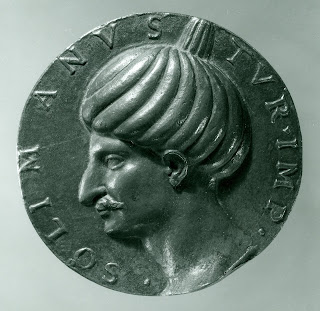
Sulaiman "Süleyman", Turkish Emperor (1520–1566)

Image
Medal of Sultan Sulaiman Khan the Magnificent  Sulaiman, Turkish Emperor (1520–1566). The bronze medal of Sultan Sulaiman Khan the Magnificent  (1494-1566), Northern Italian, 1525. Diameter: 12,8 cm.  Inscription :  “• SOLIMANVS• TVR• IMP•”, SOLYMANVS TVR[carum] IMP[erator], (Sulaiman, Turkish Emperor ).  Kanuni Sultan Süleyman Han Madalyonu Süleyman Türk İmparatoru (1520–1566).  Bronz Kanuni Sultan Süleyman Han (1494-1566) madalyonu. Kuzey İtalya, 1525. Çap: 12,8 cm.  Yazıt :  “• SOLIMANVS• TVR• IMP•”,  SOLYMANVS TVR[carum] IMP[erator], ( Süleyman, Türk İmparatoru)

The first print of an actual naval battle. The Battle of Zonchio "İnebahtı Deniz Muharebesi", August 1499.

Image
The Naval Battle of Zonchio,  AD 1499 The Naval Battle of Zonchio; Anonymous, woodcut print, hand-coloured using stencils, AD 1499, Venetia. This is possibly the first print of an actual naval battle. The Naval Battle of Zonchio (Turkish: 1. İnebahtı Deniz Muharebesi) took place on August 1499. It was the first naval battle in history where cannons were used on ships. The combatants shown are a Turkish carrack commanded by Kemal Ali, and two Venetian carracks commanded by Antonio Loredan and Albano d'Armer. Venetian and Turkish ships are labelled NAVE LOREDAN, NAVE TURCHESCA and NAVE DEL ARMER. The Turks were victorious. İnebahtı Deniz Muharebesi, M.S. 1499 Birinci İnebahtı Deniz Muharebesi; şablonlar kullanarak elle renklendirilmiş, anonim, ahşap baskısı, MS 1499, Venedik. Bu muhtemelen aktüel bir deniz savaşını resmeden ilk baskısıdır. Zonchio Deniz Savaşı (1. İnebahtı Deniz Muharebesi) Ağustos 1499'da gerçekleşti. Tarihte topların gemilerde kullanıldığı...

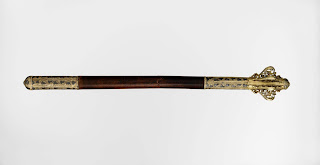
Turkish Mace "Bozdoğan, Gürz" dated 1648–87

Image
Mace (Bozdoğan, Gürz) Turkish Mace (Bozdoğan, Gürz), made of silver, copper alloy (niello), leather and wood, dated 1648–87. This delicately crafted silver-gilt mace, with tulip designs, was an insignia of command in the Turkish army. Length 60.96 cm, Weight 535 g. A mace is a weapon that uses a heavy knob on the end of a handle to deliver powerful blows. Türk  Topuz ( Bozdoğan,Gürz) Türk Bozdoğan (Gürz, Topuz), 1648-87 arası tarihli, gümüş, bakır alaşımları (Savat), deri ve ahşaptan yapılmış. Özenle hazırlanmış, gümüş kaplama, lale tasarımlı bu Gürz, Türk ordusunda komuta ve rütbe alametiydi.  Uzunluk 60.96 cm, Ağırlık 535 g. Bozdoğan (Gürz, Topuz), güçlü darbeler sağlamak için bir sapın ucunda ağır bir tokmak kullanılan bir silahtır.

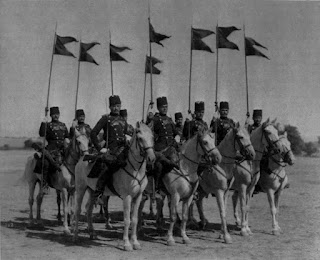
Squadron of soldiers of the Ertugrul "Ertuğrul" Cavalry Regiment

Image
Ertugrul Cavalry Regiment   Squadron of soldiers of the Ertuğrul Cavalry Regiment of the Imperial Guard, Istanbul.  From Abdulhamid II Photograph collection, photographed by Abdullah Brothers between 1880 and 1890, Istanbul. Abdulhamid II collection is a monumental photograph collection that portrays Turkey during the reign of Sultan Abdulhamid Khan II.           Ertuğrul Süvari Alayı   İmparatorluk Muhafızları, Ertuğrul süvari alayından bir bölük asker, İstanbul.  2. Abdülhamit fotoğraf koleksiyonuna ait fotoğraf, Abdullah Biraderler tarafından 1880 ile 1893 arasında İstanbul’da çekilmiştir. Abdülhamit II koleksiyonu, Sultan Abdülhamit Han dönemindeki Türkiye'yi canlandıran anıtsal bir fotoğraf koleksiyonudur.      

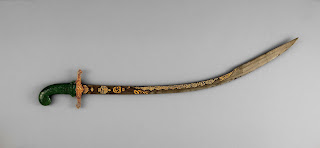
Turkish Saber "Kilij", 16th century.

Image
Turkish Kilij Turkish Kilij (Kılıç, literally "sword") from 16th century. The sword is made of watered steel, with jade grip, golden guard and decorated with inscripitions, gold and ruby.  A “Kilij” is a type of one-handed, single edged and moderately curved saber used by the Turks throughout history starting from the Hsiung-nu period. The Turkish root verb "kır-" means "to break" with the suffix "-inç" makes "kır-ınç" (instrument for breaking) becomes kılınç, then kılıç. Türk Kılıcı 16. yüzyıla ait Türk Kılıcı. Kılıç çifte su verilmiş çelikten yapılmış olup, yeşim taşı kabzalı, altın balçaklıdır, altın kakma yazı ve yakutlarla süslenmiştir. Kılıç, Asya Hunları döneminden başlayarak tarih boyunca Türkler tarafından kullanıla gelmiş, tek elle kullanılan, tek tarafı kesin, hafif kavisli bir süvari silahıdır. Türkçe “kır” fiilinin kök olduğu kelime “ınç” soneki ile “kır-ınç” (kırmak için alet) şeklinde türetilmiş, za...

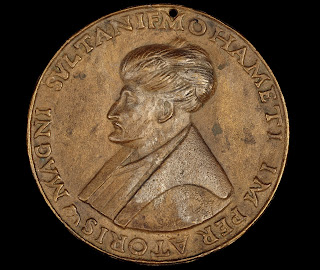
MEHMED II The Conqueror, Sultan of the TURKS

Image
Medal of  Sultan Mehmed Khan II MEHMED II Sultan of the TURKS. The Bronze Medal of  Sultan Mehmed Khan II  (1432 – 1481),  made by Gentile Bellini, Venice 1480, diameter: 9.2 cm.  Inscriptions on the obverse:  “MAGNI SVLTANIFMOHAMETI IMPERATORIS”  (The Great Sultan Mehmed Emperor) Inscriptions on the reverse:   “GENTILIS BELLINVS VENETVS EQVES AVRATUS COMES . Q[ue] . PALATINVS . F[ecit] . ”  (Gentile Bellini, Venetian, gilded knight and count palatine, made it)   Obverse Reverse Fatih Sultan Mehmet Han Madalyonu Fatih Sultan Mehmet, TÜRKLERİN Sultanı. Gentile Bellini tarafından yapılan bronz Fatih Sultan Mehmet Han (1432 – 1481) madalyonu, Venedik 1480, çap: 9.2 cm.  Ön yüzdeki y azıtlar:  “MAGNI SVLTANIFMOHAMETI IMPERATORIS”  (Büyük Sultan Mehmed, İmparator) Arka yüzdeki yazıtlar: “GENTILIS BELLINVS VENETVS EQVES AVRATUS COMES . Q[ue] . PALATINVS . F[ec...

Turban Helmet with Aventail "Peçelikli Miğfer", 15th century

Image
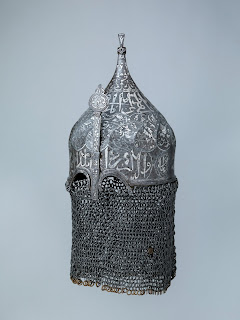
Turkish Turban Helmet Turkish Turban Helmet with Aventail (Peçelikli Miğfer), stamped with the Kayı Boyu Tamgha, late 15th century. This turban helmet retains the mail aventail that protected the lower half of the face and neck. The aventail is fixed with a lead seal stamped with the Kayı tribe Tamgha used in the Ottoman Dynasty arsenals. A tamgha (stamp, seal) is an abstract seal used by Turks as the emblem of a particular tribe. The KAYI tribe (Turkish: Kayı boyu) is a sub-branch of the BOZOK Tribal federation of OGHUZ Turks. Osman I, founder of Ottoman Dynasty was a hereditary leader in the Kayı tribe. Royal arsenal of the Ottoman Dynasty used Kayı Tamgha as it’s distinctive mark on every kind of weaponry. Türk Peçelikli Miğfer  Kayı Boyu damgası ile mühürlenmiş, Türk Peçelikli Miğfer (Tolga/Tulga), geç 15. yüzyıl. Bu miğferin yüzün alt kısmını ve boynu koruyan zincir zırh peçeliği halen mevcuttur. Peçeliğe Osmanlı hanedanı silahhanelerinin kullandığı K...

Gold Coin of Yavuz Sultan Selim Khan (1512-1520)

Image
Ottoman Dynasty Gold Coin "Sultani" The Sultani, (Ottoman Dynasty Gold Coin) minted by Yavuz Sultan Selim Khan (1512-1520) in Istanbul, 19 mm x 3.42 grams, dated 1512/1513. Sultani is the classic Ottoman Dynasty gold coin also known generically as altın ("gold").  Inscriptions on the obverse; In Arabic:  “Darib-ün nadri sahib-ül izzi ven-nasri  filberri vel-bahr.”   English Tranlation:  “Striker of the Glittering, Master of might and victorious of land and the sea.”  Inscriptions on the reverse; In Arabic:  “Sultan Selim Sah bin Bayezid Han azze nasruhû duribe Kostantiniyye 918.”  English Translation:  “Shah Sultan Selim Son of Bayazid Khan, may his victory be glorious, struck in Constantinople 918.” Obverse of the Sultani Reverse of the Sultani Osmanlı Hanedanı Altın Sikke "Sultani" Yavuz Sultan Selim Han (1512-1520) tarafından İstanbul’da bastırılan 1512/1513 tarihli Sultani ...

A Chestnut Turcoman stallion named Türkmen

Image
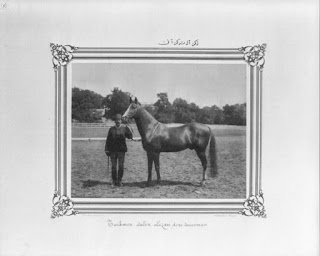
Turcoman Stallion Turkmen; A Chestnut Turcoman stallion at the Imperial stud farm, Istanbul.  From Abdulhamid II Photograph collection, photographed by Abdullah Fréres between 1880 and 1893, Istanbul. Abdulhamid II collection is a monumental photograph collection that portrays Turkey during the reign of Sultan Abdulhamid Khan II. Türkmen Aygır Türkmen;  Al donlu Türkmen aygırı, İmparatorluk harası, İstanbul.  II. Abdülhamit fotoğraf koleksiyonuna ait fotoğraf, Abdullah Biraderler tarafından 1880 ile 1893 arasında İstanbul’da çekilmiştir. Abdülhamit II koleksiyonu, Sultan Abdülhamit Han dönemindeki Türkiye'yi canlandıran anıtsal bir fotoğraf koleksiyonudur.

Turkish Yatagan, Sword A.D. 1822

Image
Turkish Yatagan  Turkish Yatagan (Yatağan). Inscribed with the date 1238 (A.D. 1822), the name of the maker ("Made by Abdullah"), six Turkish verses of good will towards the owner, and the names of two owners (Ismael Gazi and Abdul Kadar). The blade elaborately decorated in gold and corals set into the handle, length 74,3 cm. The Yatagan or Yataghan is a type of Turkish short saber which differentiate by a single-edged blade that curves slightly inward and by a hilt with no guard and the pommel being shaped like large ears. Yatagan was carried in "lying down" fashion in the waistband. Türk Yatağanı Türk Yatağanı. Üzerine 1238 (Miladi 1822) tarihi, yapımcı ustanın adı ("Abdullah tarafından yapılmıştır"), sahibine karşı iyi dileklerde bulunan, Türkçe, altı adet mısra ve iki farklı sahibinin adı (İsmail Gazi ve Abdülkadir) işlenmiştir. Yalım özenle, altın işleme ile dekore edilmiş ve kabzaya mercan kakılmıştır, uzunluğu 74,3 cm dir. Y...

Medal commemorating Hayreddin Barbarossa "Hızır Reis"

Image
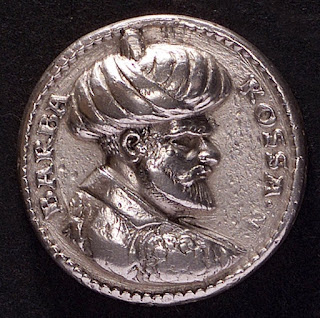
Admiral Hayreddin Barbarossa Silver medal commemorating Admiral Khair Ad-din (Hayreddin) Barbarossa, Grand Admiral (Kaptan-ı Derya) of the Turkish Empire. Made by Ludwig Neufarer, Germany, 1533, diameter: 27 mm.  Inscriptions on the obverse in Italian,:  “BARBA ROSSA”  (Red Beard)  Inscriptionson the reverse in Turkish:   “HAYREDDİN PAŞA CEZAYİR, SULTAN"  (Khair Ad-din Pasha Algiers, Sultan) Amiral Barbaros Hayreddin Paşa  Türk İmparatorluğu Kaptan-ı Deryası Amiral Barbaros Hayreddin Paşa anısına gümüş madalyon, Ludwig Neufarer, Almanya, 1533, çap: 27 mm.  Yazıtlar ön yüzde italyanca:  “BARBA ROSSA”  (Kızıl Sakal)  Arka yüzde Türkçe: “HAYREDDİN PAŞA CEZAYİR, SULTAN”

Turkish Shirt of Mail and Plate

Image
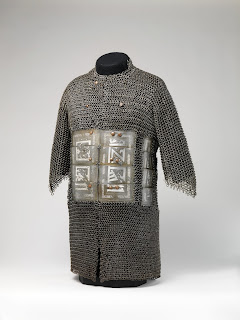
Turkish Mail Armour with Kayı Tamgha Turkish Mail and plate armour made of steel, iron, copper alloy and silver, late 15th century. Height: 86,4 cm. Weight: 9.349 g. Armour was constructed of small interlocking rings, called mail and reinforced with steel plates to cover the vital areas of the torso and stamped on the front of the lower left plate with the Kayı tribe Tamgha. A tamgha (stamp, seal) is an abstract seal used by Turks as the emblem of a particular tribe. The KAYI tribe (Turkish: Kayı boyu) is a sub-branch of the BOZOK Tribal federation of OGHUZ Turks. Osman I, founder of Ottoman Dynasty was a hereditary leader in the Kayı tribe. Royal arsenal of the Ottoman Dynasty "Cebehane" used Kayı Tamgha as it’s distinctive mark on every kind of weaponry. Kayı Boyu Damgalı Türk Zırh Gömlek Çelik, demir, bakır alaşımı ve gümüşten yapılmış, Türk, levha takviyeli, zincir zırh, geç 15. Yüzyıl. Yükseklik: 86,4 cm. Ağırlık: 9.349 gr. Küçük metal halkaların...

Sultan Othman "Osman" Khan the first (1258 – 1326)

Image
Sultan Othman Khan I Sultan Othman Khan the first (1258 – 1326) from Portraits of the Emperors of Turkey - London, 1815 by  John Young. Sultan Selim III commissioned English engraver John Young (1755- 1825) to make a series after portraits of the emperors of Turkey before 1807, but production halted when janissaries assassinated the sultan. Mahmoud II ascended the throne, and John Young resumed work in 1810. This sheet shows the founder of the Ottoman dynasty, Othman (Osman) the first. He reigned from 1299 to 1326 and was said to be a great tactician known for his stern demeanor. The vignette below represents Othman in his camp, sitting under an imperial canopy, attended by his courtiers, and issuing orders to his officers. Sultan I. Osman Han "Osman Gazi" Sultan I. Osman Han (1258 - 1326) “Türkiye'nin İmparatorlarının Portreleri” (Portraits of the Emperors of Turkey) - London, 1815,  John Young. Sultan III. Selim Han 1807 öncesinde Türkiye'n...

Turkish Helmet Stamped with Kayı Tamgha, 15th century

Image
Turkish Turban Helmet  Turkish Turban Helmet (Peçelikli Miğfer) stamped with the Kayı tribe Tamgha, late 15th century. A tamgha (stamp, seal) is an abstract seal used by Turks as the emblem of a particular tribe. The KAYI tribe (Turkish: Kayı boyu) is a sub-branch of the BOZOK Tribal federation of OGHUZ Turks. Osman I, founder of Ottoman Dynasty was a hereditary leader in the Kayı tribe. Royal arsenal of the Ottoman Dynasty "Cebehane" used Kayı Tamgha as it’s distinctive mark on every kind of weaponry. Türk Peçelikli Miğfer "Tolga" Kayı Boyu damgalı, Türk Peçelikli Miğfer (Tolga), geç 15. yüzyıl. Tamga (Damga) Türkler tarafından belirli bir boyun amblemi olarak kullanılan soyut bir mühürdür. KAYI boyu Oğuzların BOZOK koluna dâhil bir alt boydur. Osmanlı hanedanının kurucusu Osman Gazi, Kayı boyunun Beyidir. Osmanlı Hanedanı silahhanesinde Kayı Damgası ayırt edici işaret olarak her türlü silah ve askeri teçhizat üzerine vurulmuştur.   ...

Turkish Saddle, 16th Century

Image
Turkish Saddle Turkish Saddle, late 16th Century. Made of wood, staghorn, bark, leather, textile, iron and pigment with the use of pierced leather decoration appliquéd on different colored grounds. Dimensions: Height 57,8 cm. Width 61 cm. Weight 4130 g. Türk Eyeri Geç 16. yüzyıla ait Türk Eyeri. Ahşap, geyik boynuzu, ağaç kabuğu, deri, kumaş, demir ve boyadan, işlenerek dekore edilmiş derinin farklı renklerde zemin üzerine aplikasyonu yöntemi ile imal edilmiştir. Boyutlar: Yükseklik 57,8 cm. Genişlik 61 cm. Ağırlık 4130 gr.

Horse's Head Armour "Chamfron" stamped with the Kayı Tamga

Image
Turkish Horse's Head Armour "Chamfron" Turkish, Tombak (Copper alloy), Chamfron (Horse's Head Defense) stamped with the Kayı tribe Tamga, 16th century. Height: 59, 06 cm. Width: 22, 23 cm. Weight: 1917 g. This tombak, chamfron was intended for ceremonial use, as Turkish battle armour for both horse and rider was generally fabricated of steel. A tamgha (stamp, seal) is an abstract seal used by the Turks as the emblem of a particular tribe. The KAYI tribe (Turkish: Kayı boyu) is a sub-branch of the BOZOK Tribal federation of OGHUZ Turks. Osman I, founder of Ottoman Dynasty was a hereditary leader in the Kayı tribe. Royal arsenal of the Ottoman Dynasty (Cebehane) used Kayı Tamga as it’s distinctive mark on every kind of weaponry. Türk At Alın Zırhı Kayı boyu damgası vurulmuş, Türk, Tombak, At başı zırhı, 16. Yüzyıl. Yükseklik: 59,06 cm. Genişlik: 22,23 cm. Ağırlık: 1917 gr. Bu tombak, at alın zırhı törensel kullanıma yönelikti zira hem at...

Turkish Saber "Kilij" 15th Century

Image
Turkish Kilij Turkish Kilij (Kılıç, literally "sword") from early 15th century.The blade is chiseled in relief  with verses from the Holy Quran, with the surrounding areas inlaid with gold.  The guard is chiseled with gold-damascened flowers and was formerly inlaid with rubies. The grip, covered with fishskin dyed gren. A “Kilij” is a type of one-handed, single edged and moderately curved saber used by the Turks throughout history starting from the Hsiung-nu period. The Turkish root verb "kır-" means "to break" with the suffix "-inç" makes "kır-ınç" (instrument for breaking) becomes kılınç, then kılıç. Türk Kılıcı Erken 15. yüzyıla ait Türk Kılıcı. Çeliğe oyma kabartma halinde Kuran-ı Kerimden ayetler işlenmiş ve çevresi altın kakma ile süslenmiştir. Balçakta evvelce yakut kakmaları olan hareli, altın çiçek oymaları işlidir. Kabza yeşile boyanmış balık derisi ile kaplıdır. Kılıç,   Asya Hunları döne...

Medal of Sultan Sulaiman Khan the Magnificent

Image
  Sultan Suleiman Khan the Magnificent Sultan of Turkey (1520–1566). The bronze medal of Sultan Sulaiman Khan the Magnificent  (1494-1566), Venice 1520. Diameter : 13 cm. Inscription : “SOLYMAN IMP TVR”,  SOLYMAN IMP[erator] TVR[carum] (Sulaiman, emperor of Turkey). Kanuni Sultan Süleyman Han Türkiye’nin Sultanı (1520–1566). Bronz Kanuni Sultan Süleyman Han (1494-1566) madalyonu.Venedik 1520. Çap : 13 cm. Yazıt : “SOLYMAN IMP TVR”,  SOLYMAN IMP[erator] TVR[carum] ( Süleyman, Türkiye’nin İmparatoru)